Viduli + Calcey: A practical platform partnership
Viduli can help Calcey improve deployment outcomes for clients and earn a 10% lifetime commission on referred cloud spend.
Built for long-term delivery work, not one-off referrals.
Client delivery can be slow at the production layer
Many teams build application features quickly, but moving a real system into production still creates repeat work around infrastructure, managed services, observability, and ongoing operations.

Production setup takes time
Delivery teams still lose time on environment setup, deployment pipelines, networking, and service configuration before a client sees a stable production system.

Modern apps need more than app hosting
Client systems usually need databases, caching, messaging, routing, monitoring, and logs alongside the application itself.

Tooling becomes fragmented
Teams end up stitching together cloud consoles, deployment tooling, observability products, and custom infrastructure code across projects.

The maintenance burden stays with the team
Even after launch, someone still has to debug issues, explain the setup, and keep the stack operable over time.
Viduli provides a production platform above cloud primitives
Rather than asking each project to assemble its own infrastructure layer, Viduli combines application deployment, managed data services, networking, service communication, and operations into one platform surface.
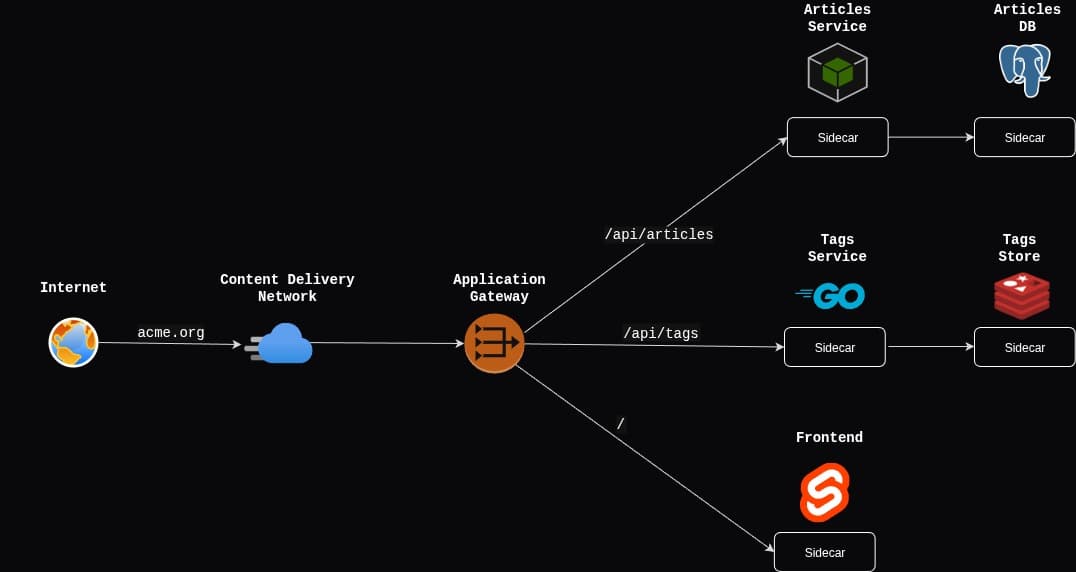

Kubernetes-based orchestration
Viduli runs workloads on Kubernetes, giving client projects industry-leading container orchestration, self-healing, rolling updates, and resource management without requiring teams to manage Kubernetes directly.
Integrated traffic handling
Gateway, routing, and service connectivity are designed to work together instead of being assembled separately for each client project.

Day-2 operations included
Metrics, logs, health checks, scaling, and resilience are part of the platform instead of another layer to code, debug and maintain.

Works with standard code and tools
Teams can keep using familiar frameworks and engineering workflows instead of adopting a closed application model.
The core services most client projects need, in one platform
Viduli starts with the main building blocks delivery teams reach for most often, so projects can keep operational complexity lower without giving up production capability.

Ignite
Deploy server applications with GitHub-based delivery and platform defaults for health, scaling, and observability.
- ✓Supports 40+ frameworks
- ✓Deploy on push to GitHub
- ✓Self-healing
- ✓API Gateway

Orbit
Managed PostgreSQL with backups, recovery options, and a closer fit with the rest of the application platform.
- ✓PostgreSQL available now
- ✓Automated backups
- ✓Point-in-time recovery
- ✓Read replicas

Flash
Managed Redis and low-latency caching integrated into the same platform experience as apps and databases.
- ✓Redis available now
- ✓Sub-millisecond latency
- ✓Sharding
- ✓Data persistence

Surge
Managed Kafka for event-driven systems, with clustered operation and topic-level controls built into the platform.
- ✓Kafka-compatible messaging
- ✓KRaft architecture, no ZooKeeper
- ✓Pre-tuned for performance
- ✓Clustered broker operation
Visual infrastructure instead of IaC pileup
The product makes system architecture legible and deployable without expanding the amount of infrastructure code teams need to review and maintain.
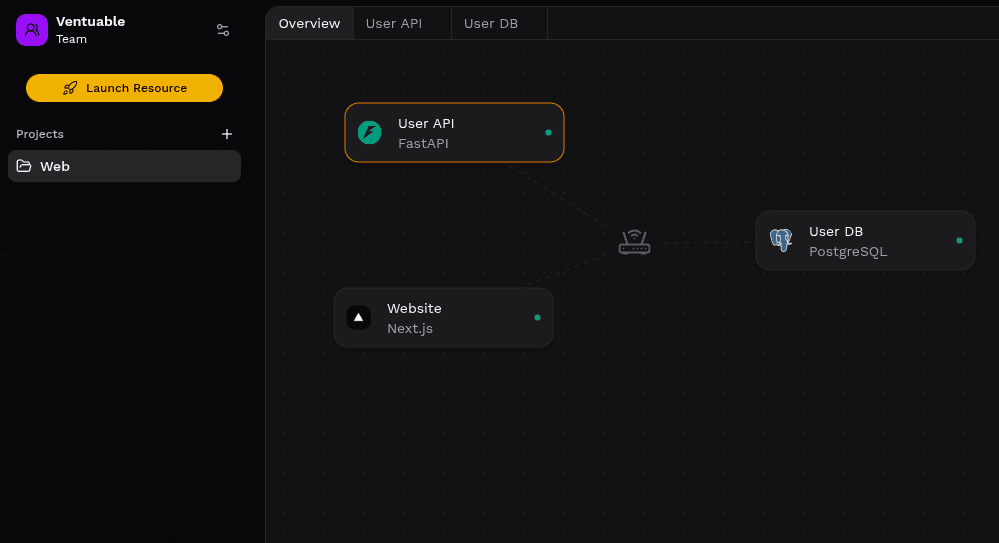
Visual architecture canvas
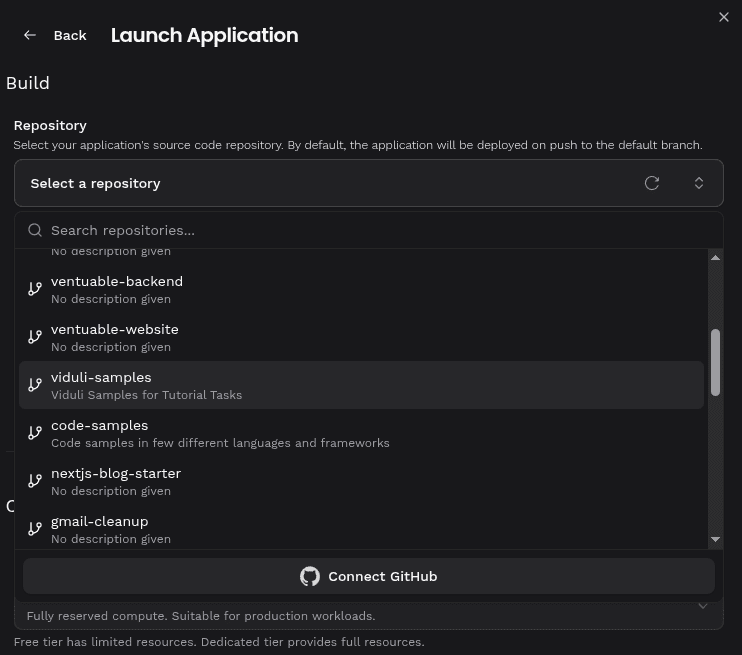
Deployment from GitHub
Alchemist extends the platform from deployment to generation
For teams that want AI acceleration, Viduli is also moving toward a model where generation and deployment sit on the same platform rather than a fragmented toolchain.

Prompt to production infrastructure
Goes beyond code generation by creating deployable applications and connecting them directly to the Viduli platform.
- ✓Generate and deploy seamlessly
- ✓Instant global infrastructure
- ✓Integrates with Viduli projects
- ✓Minutes to production
Professional code, not black boxes
Generates clean, maintainable code that engineering teams can review, extend, and own.
- ✓Readable, maintainable codebases
- ✓Follows best practices
- ✓No opaque vendor abstractions
- ✓Developers can review and modify

Full-stack systems, not toy demos
Generates enterprise-grade application foundations with the services modern software actually needs.
- ✓Postgres for primary data
- ✓Redis for caching and fast state
- ✓Kafka for event-driven workflows
- ✓Scalable architecture from day one

A new product-engineering workflow
Lets teams generate the initial foundation while engineers refine, extend, and scale it.
- ✓Product vision to software
- ✓Engineer in the loop for quality
- ✓Works with existing stack
- ✓Seamless collaboration
Writing infrastructure code faster does not simplify the work
AI can help draft Terraform, Helm, or Kubernetes manifests faster. The resulting system still needs to be reviewed, debugged, secured, upgraded, and handed over. Viduli simplifies the process by removing a meaningful part of that surface area.

Less code to maintain
Generated IaC still becomes another codebase that someone has to own. Viduli reduces the amount of infrastructure code many projects need in the first place.
Less to debug
When the platform handles common production concerns directly, teams spend less time tracing issues across YAML, modules, scripts, and cloud services.
Smaller operational surface area
A narrower stack is easier to explain, support, and hand over than a large set of generated infrastructure definitions and glue code.
Better fit for repeatable client delivery
For a services business, reducing moving parts across projects can be more valuable than generating more moving parts faster.
A recurring revenue stream tied to client usage
Calcey can refer suitable client workloads to Viduli and receive a 10% lifetime commission on the amount those clients spend on the platform.
10% lifetime affiliate revenue
The model is designed to create ongoing value as client usage grows, rather than a one-time referral fee.
Simple economics
The revenue scales with the infrastructure usage already attached to the client project.
Aligned with delivery relationships
Calcey keeps the core client relationship while adding an additional revenue stream around platform adoption.
Commercially simple
The partnership works best where Calcey is already advising on architecture, delivery, and production readiness for client systems.
We collaborate with partners beyond referrals
The goal is to help partners place the platform where it fits well and to keep improving the product around real client requirements.
Requirement reviews
We can review candidate workloads together and assess whether the platform is a good operational and architectural fit.

Partner collaboration
We work directly with partners during onboarding and early client deployments instead of leaving the process at a simple introduction.

Product feedback loop
Partner input can feed directly into platform improvements where real customer requirements are not yet fully covered.

Next steps
A good starting point is to review one or two client systems together and identify where Viduli could add value.